How Long It Takes
Most of the off-track calls we get from Lakeland trace back to the same thing: a roller that's worn through its nylon jacket on a door that's been running fine since the house was built, somewhere around 1998. That's late enough that almost every garage in town has a torsion-spring, steel-track setup rather than the older extension-spring hardware you'll find on houses built before 1980 elsewhere in the area - which changes what actually comes off the rails when something goes wrong.
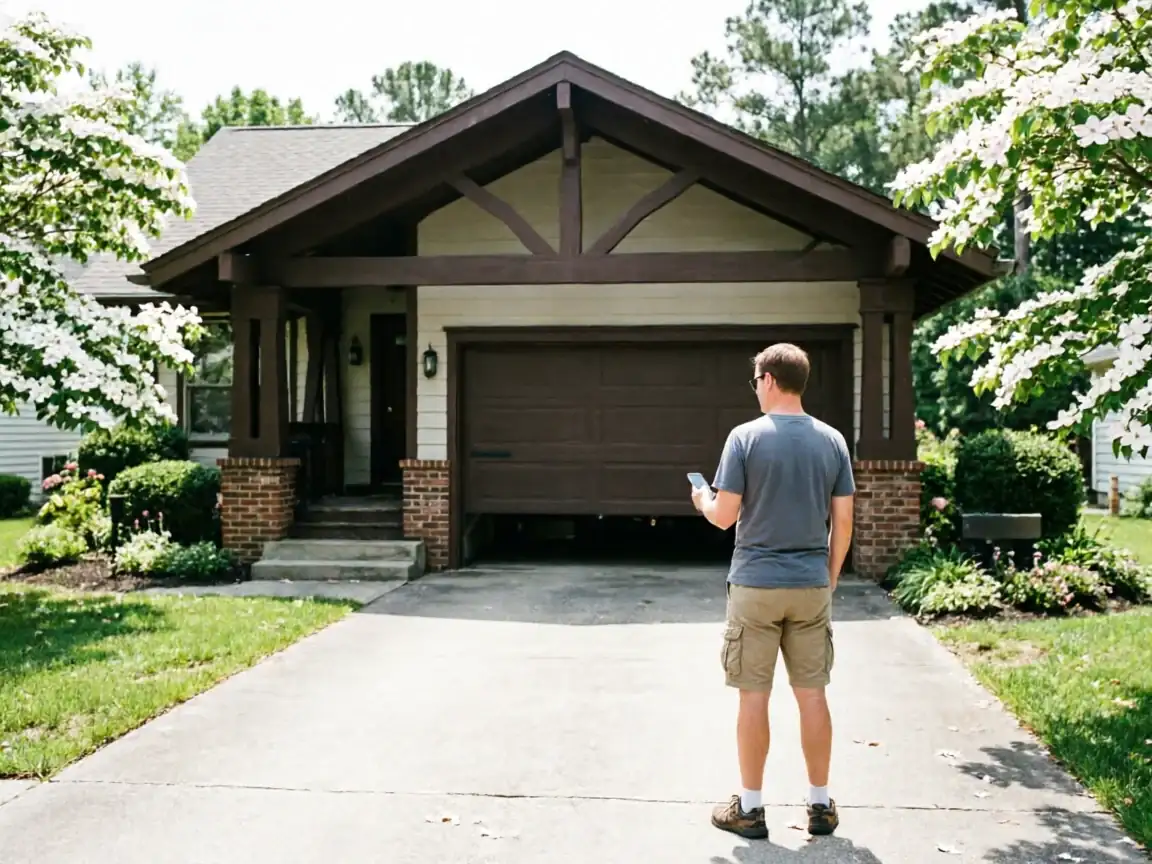
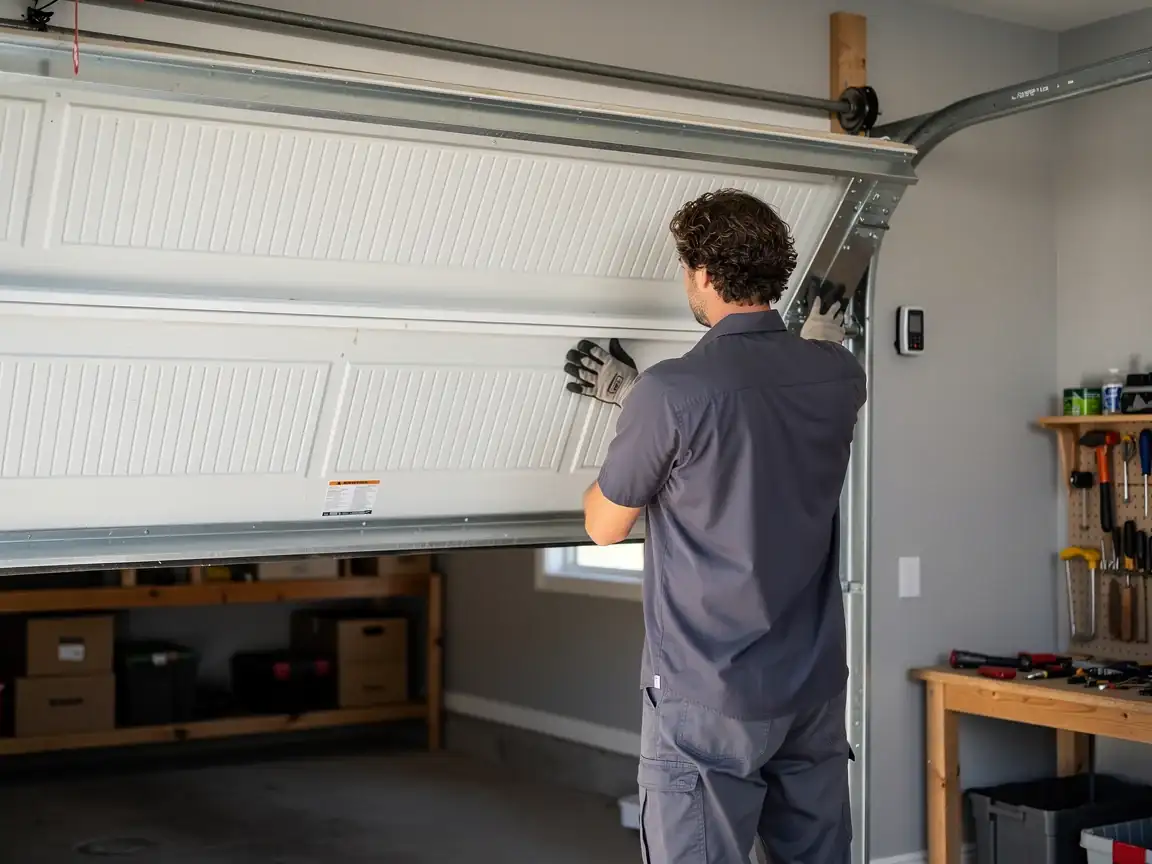
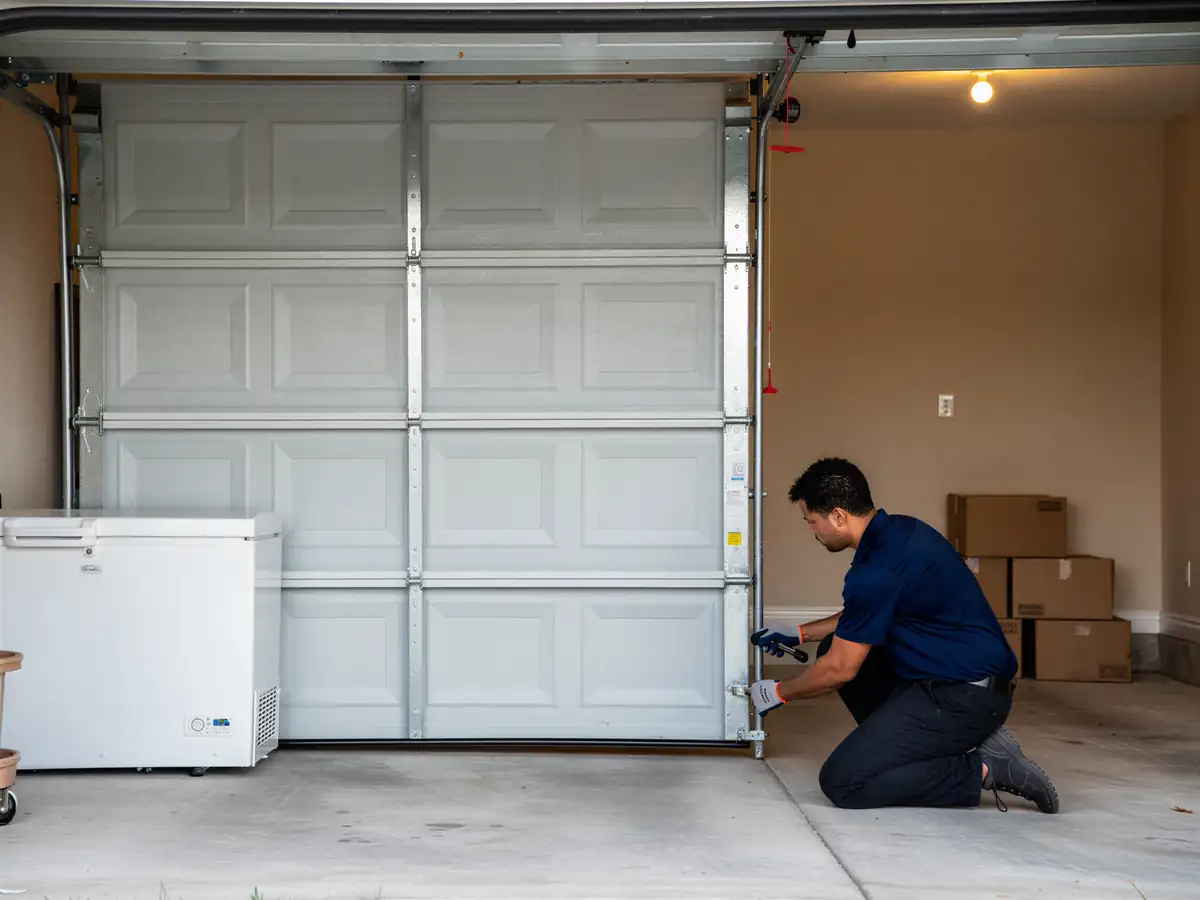
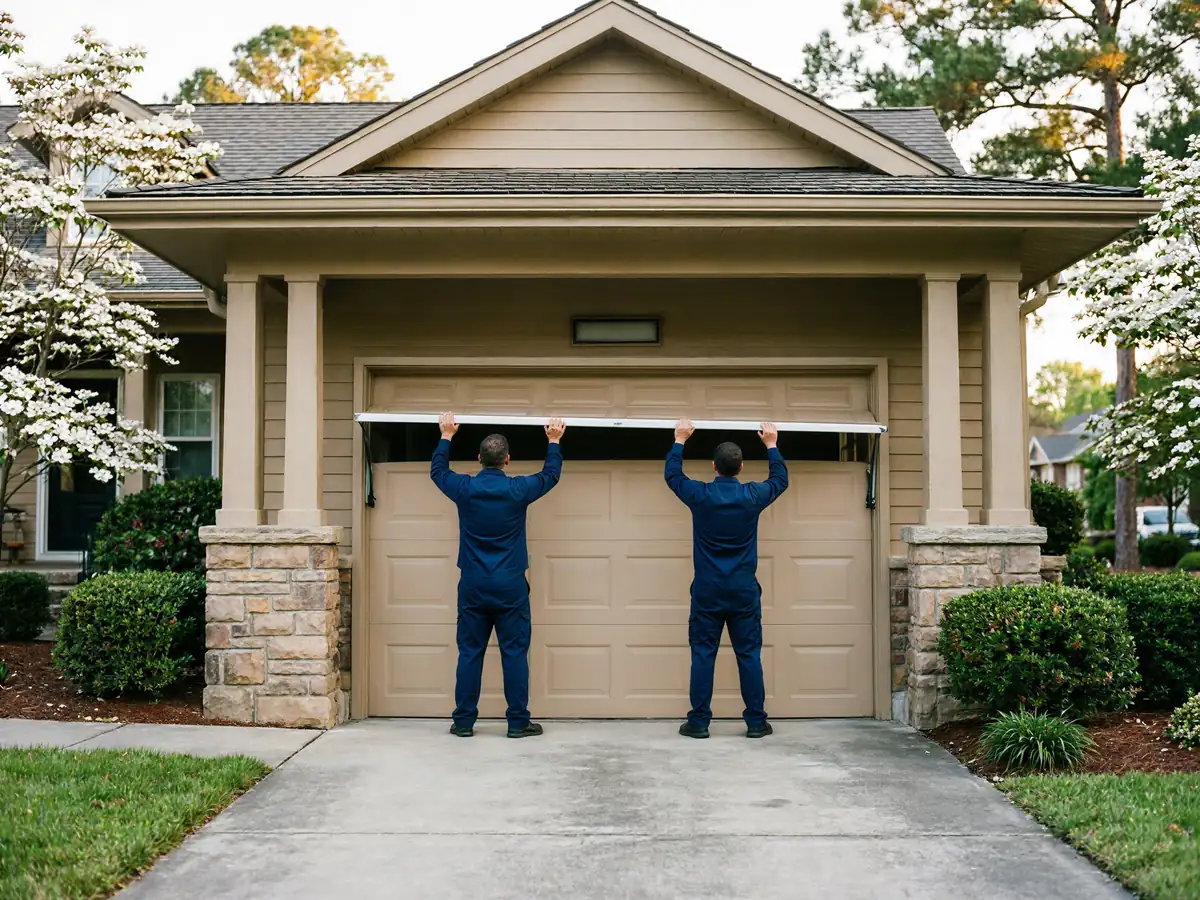
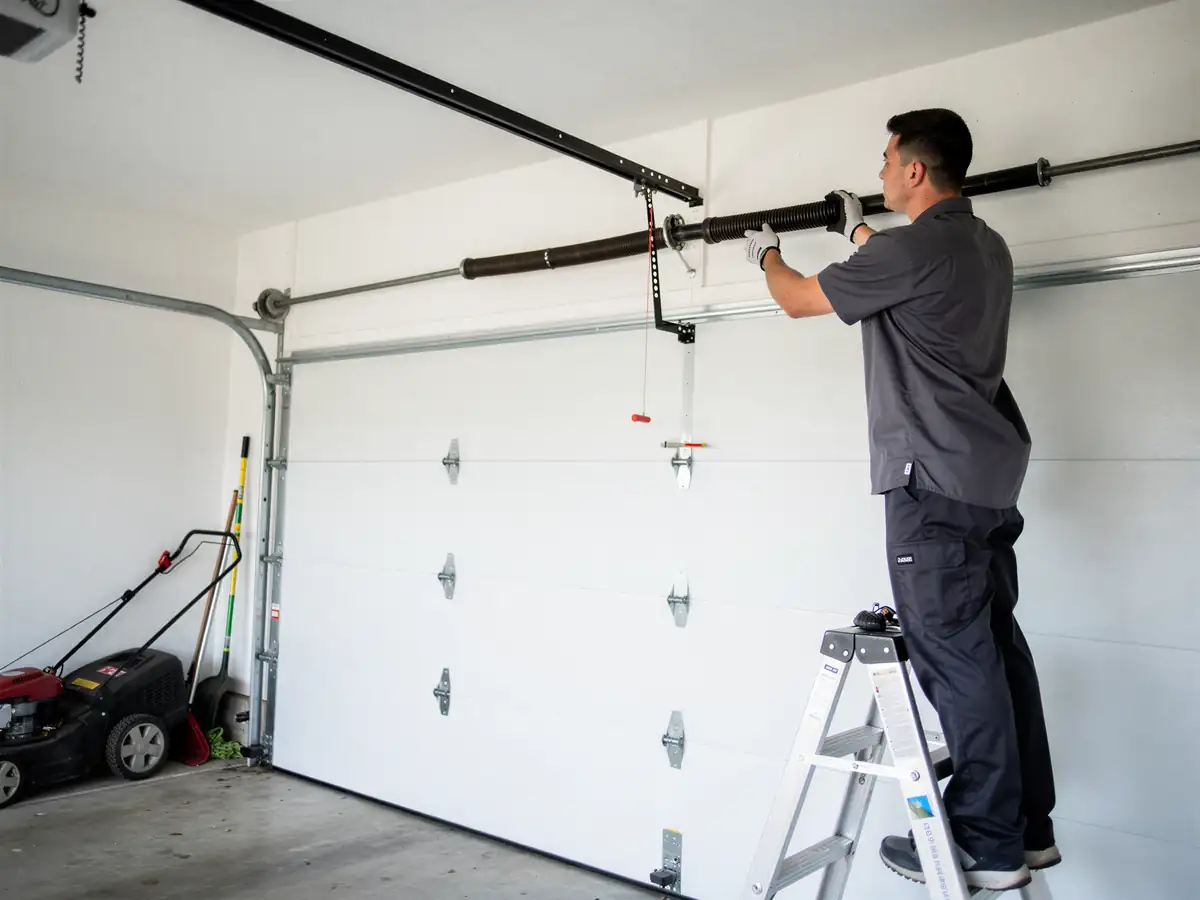
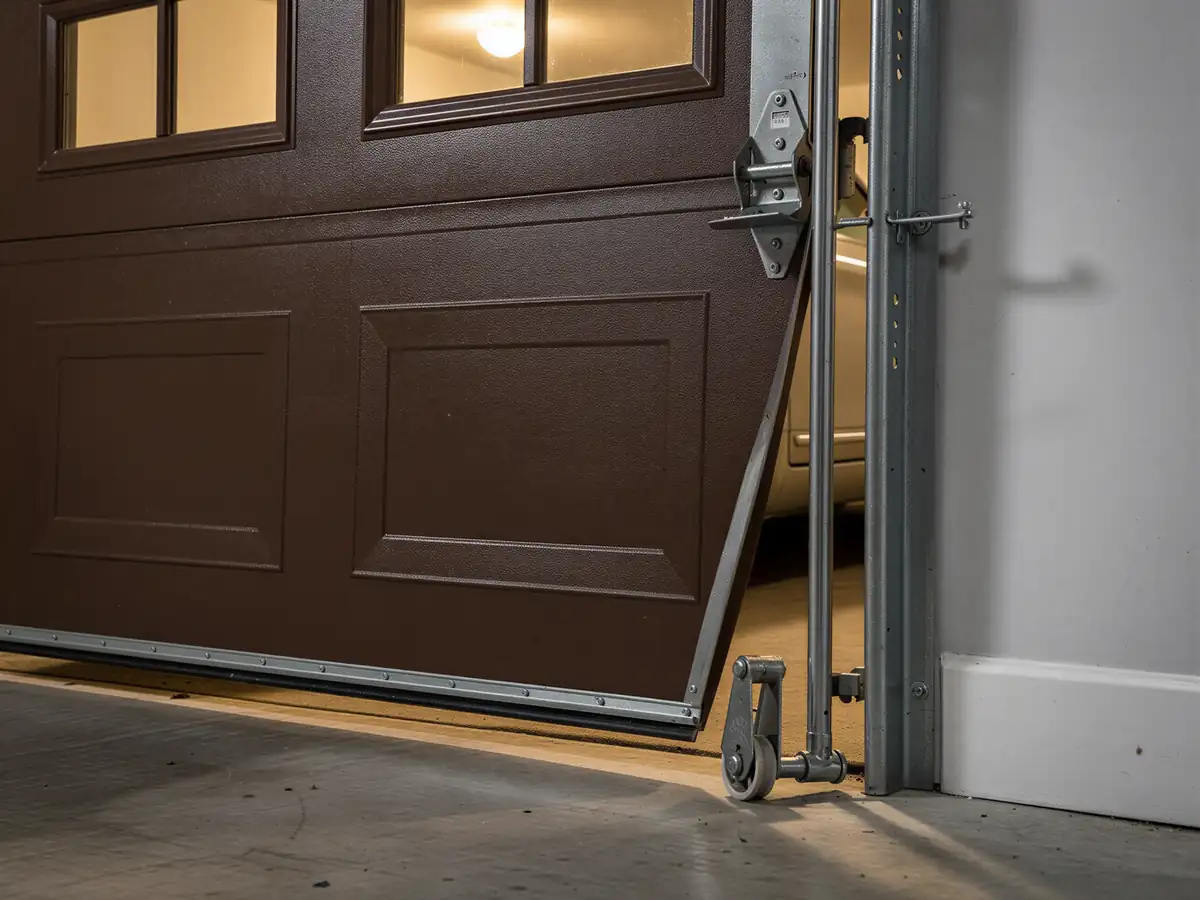
When a door jumps track here, it's usually one of two things: a roller popped out of the track at a bent section, or a cable slipped off the drum and let one side of the door drop while the other stayed up, racking the whole panel sideways. On a 25-plus-year-old torsion system, the fix is straightforward once we're on site - re-seat the rollers, true up the track, check the cable drums and the bottom brackets for wear. A single-car or double-car door with one bent section usually takes under an hour once the truck's parked. If the track has been pulled away from the jamb or a panel's bowed, that's a longer job, sometimes a same-day parts run.
Doing It Yourself
We'll say this plainly: don't try to force a door back onto its track yourself. Torsion springs on a standard double door hold a lot of stored energy, and a door that's off-track with the spring still wound is one of the few jobs where a wrong move at home actually gets someone hurt. If the door is partway open and stuck, leave it. If it's down and off-track, don't run the opener trying to clear it - that usually bends the track further or strips the opener's drive gear.
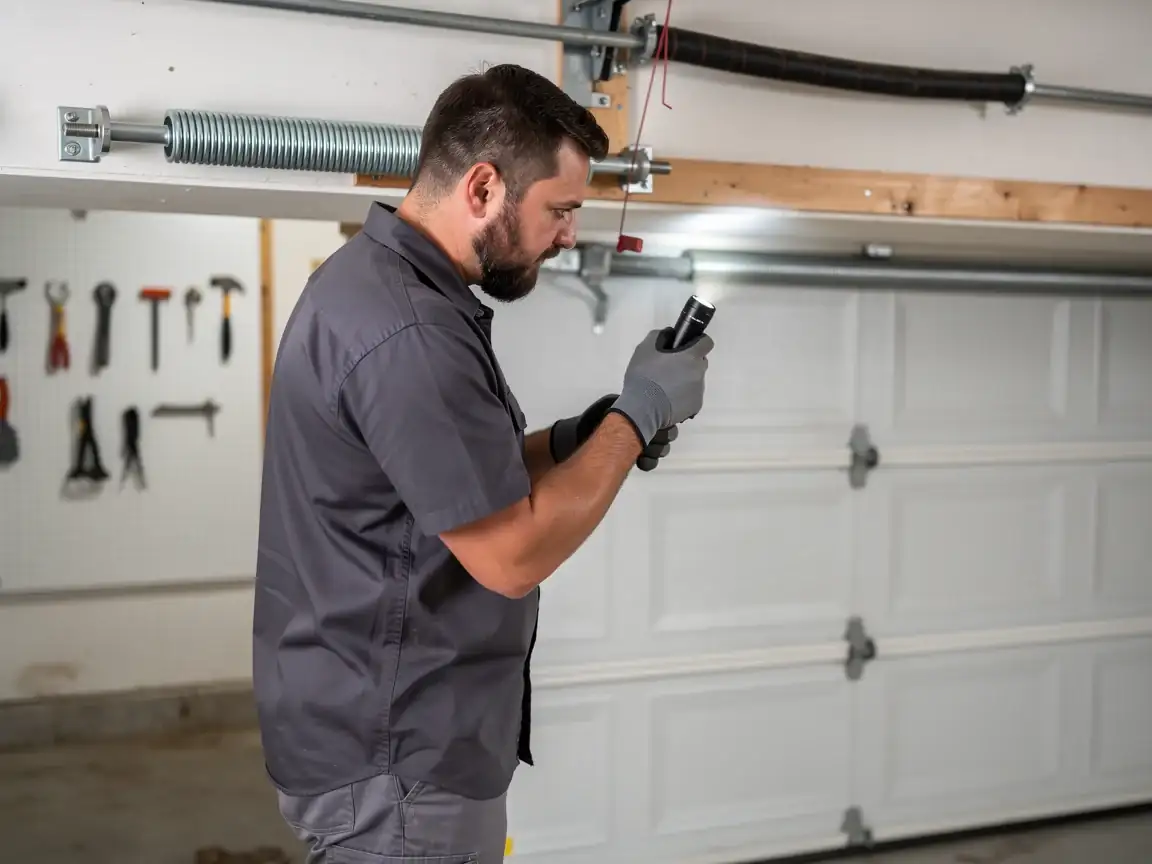
What you can safely do: pull the emergency release cord so the opener isn't fighting the door, and take a look with a flashlight at where the roller left the track. If you can see a roller sitting outside the rail near a bent spot, that's useful to tell us over the phone - it changes whether we bring a straight section of track or just tools to re-seat the roller. Beyond that, leave the spring and cable work to the truck. We travel the 17 miles out from Memphis for this exact call often enough that there's no reason to risk a finger or a dropped panel trying to fix it yourself first.
Getting It Booked In
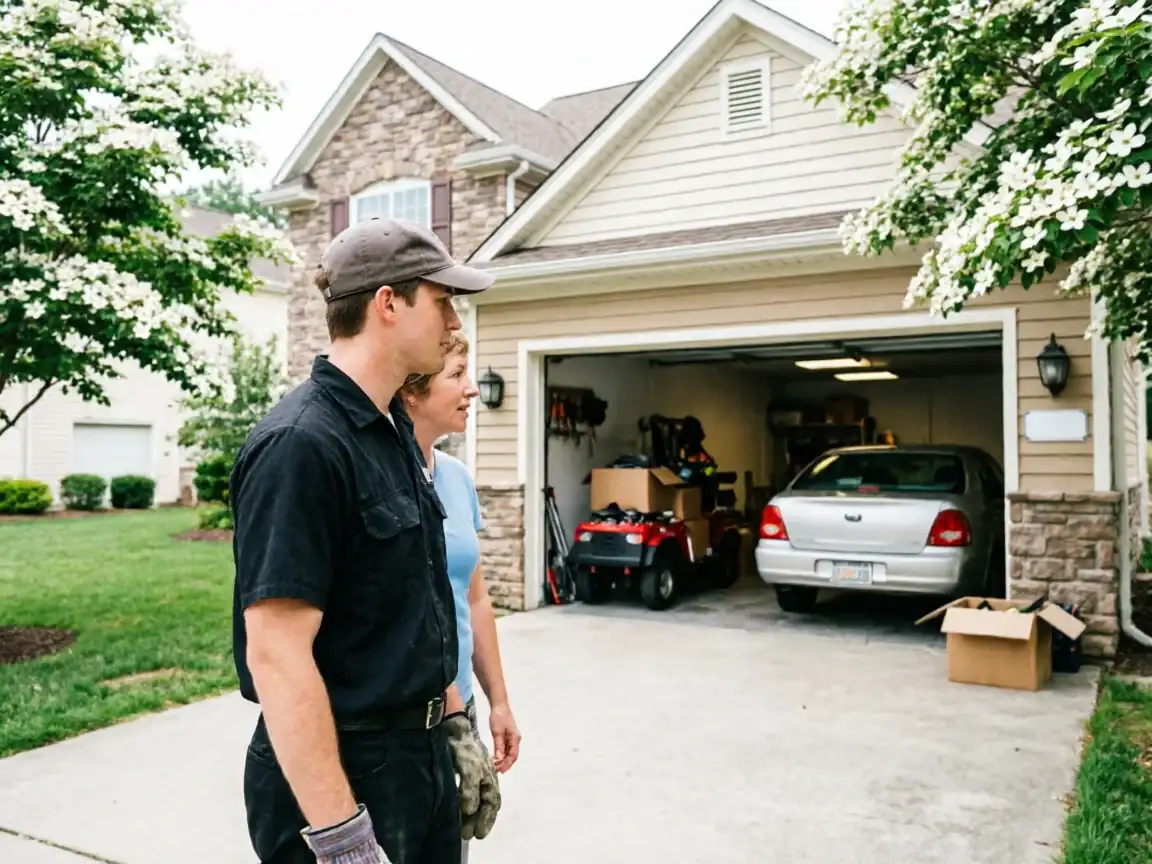
Lakeland is a 17-mile run for us
So when you call, tell us what you're seeing - door stuck half-open, door down and crooked, door that came off one side only - so we load the right rollers, track sections, and cable before we leave. With roughly 5,246 households in Lakeland and a housing stock that's largely newer than the rest of the service area, we're usually dealing with the same generation of torsion hardware house to house, which helps us show up with parts that actually fit instead of guessing.
- 5,246 households
Winters here aren't brutal
But Lakeland sits in a cold-moderate climate band, and a track that's slightly out of alignment in October can bind up hard once temperatures drop and the steel contracts. If your door's been catching or rattling on the track but hasn't come off yet, that's worth booking before it does, not after.
What It Costs
We don't publish a flat number for off-track repair because what it costs depends on what's actually bent - a roller swap and re-seat is a different job than replacing a section of track or a bowed panel. What we can tell you from working this area: Lakeland's median household income, around $113,843, is higher than the broader service area's $119,876... actually lower, and most homes here were built close to 1998, so the hardware we're pulling off these doors is consistently a specific generation of torsion springs, steel rollers, and galvanized track rather than a mix of eras. That consistency usually means we're not improvising a fix with mismatched parts, which keeps the job from running longer than it needs to.
If a track is badly bent or a panel's been pushed out of square, sometimes replacing that section costs close to what patching it would, and we'll tell you that straight rather than charge you twice.