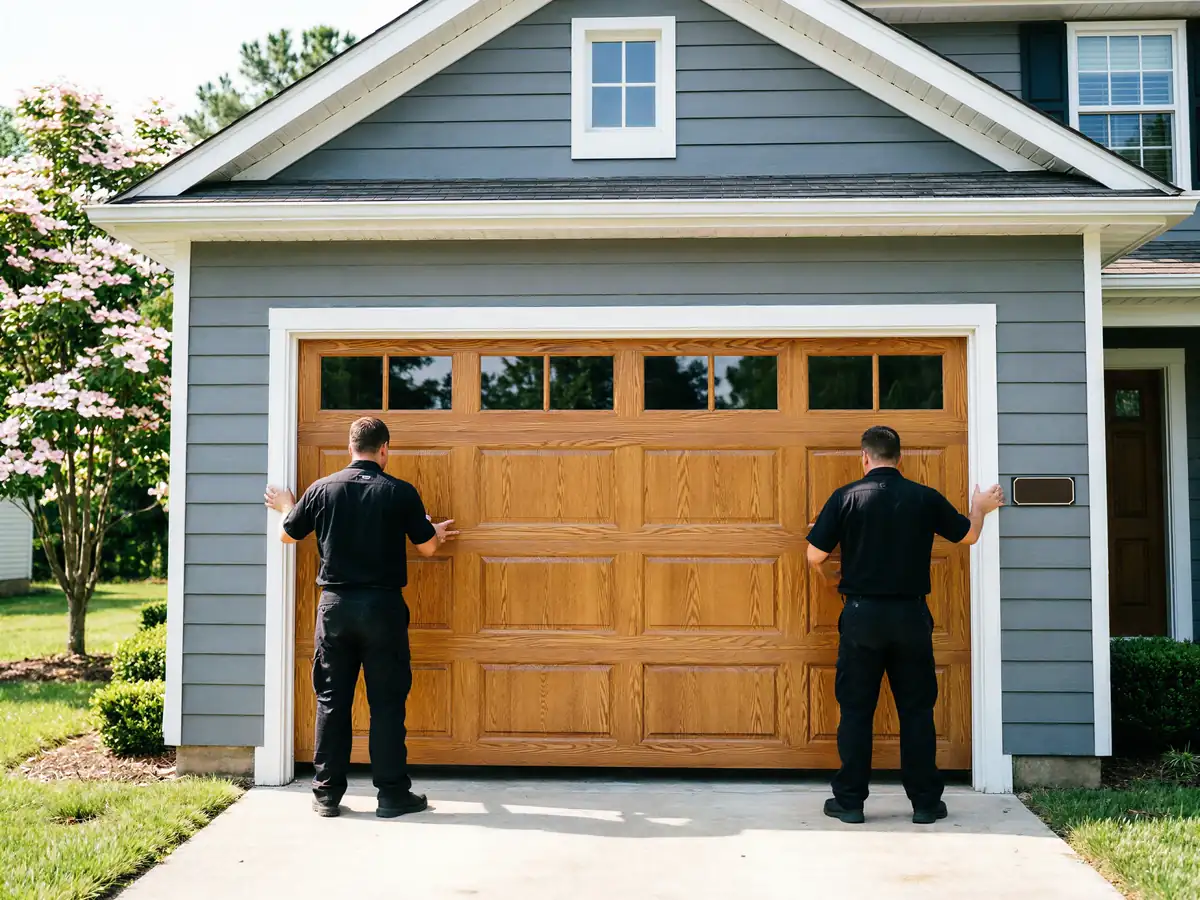
What Causes It Around Here
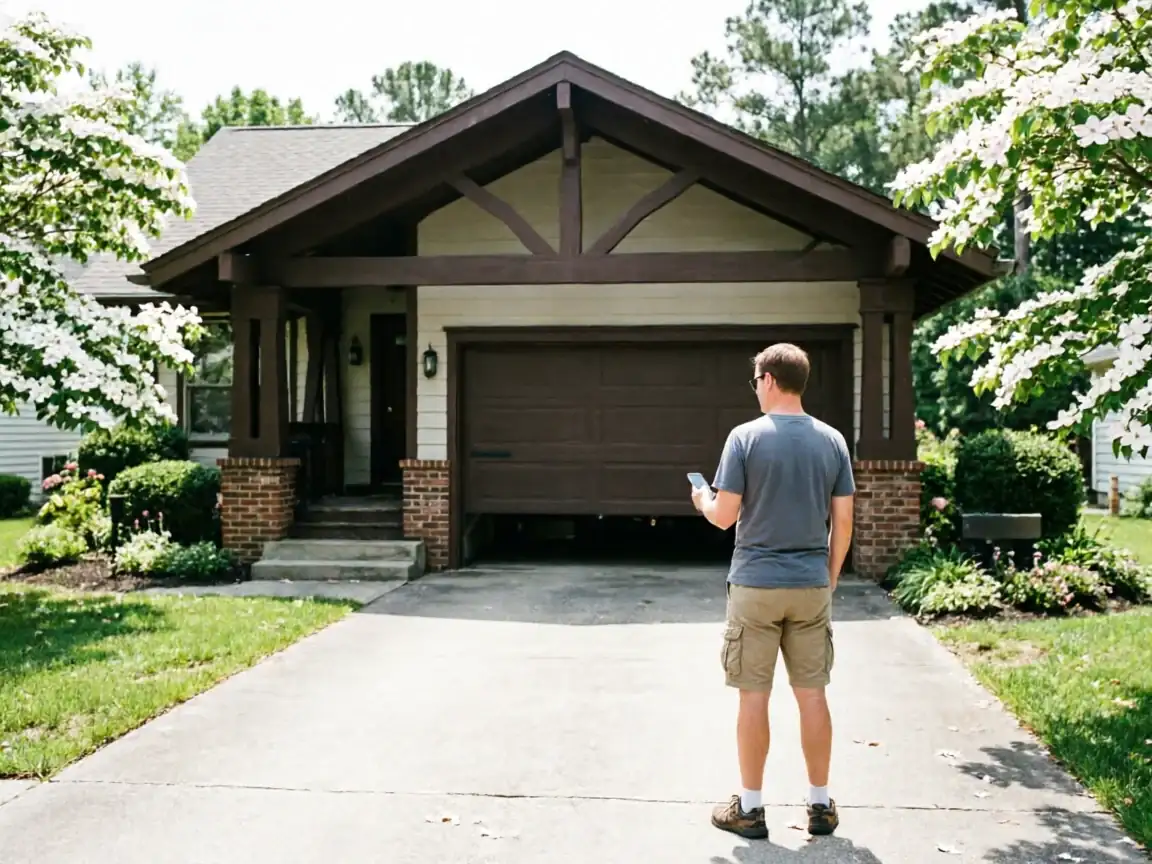
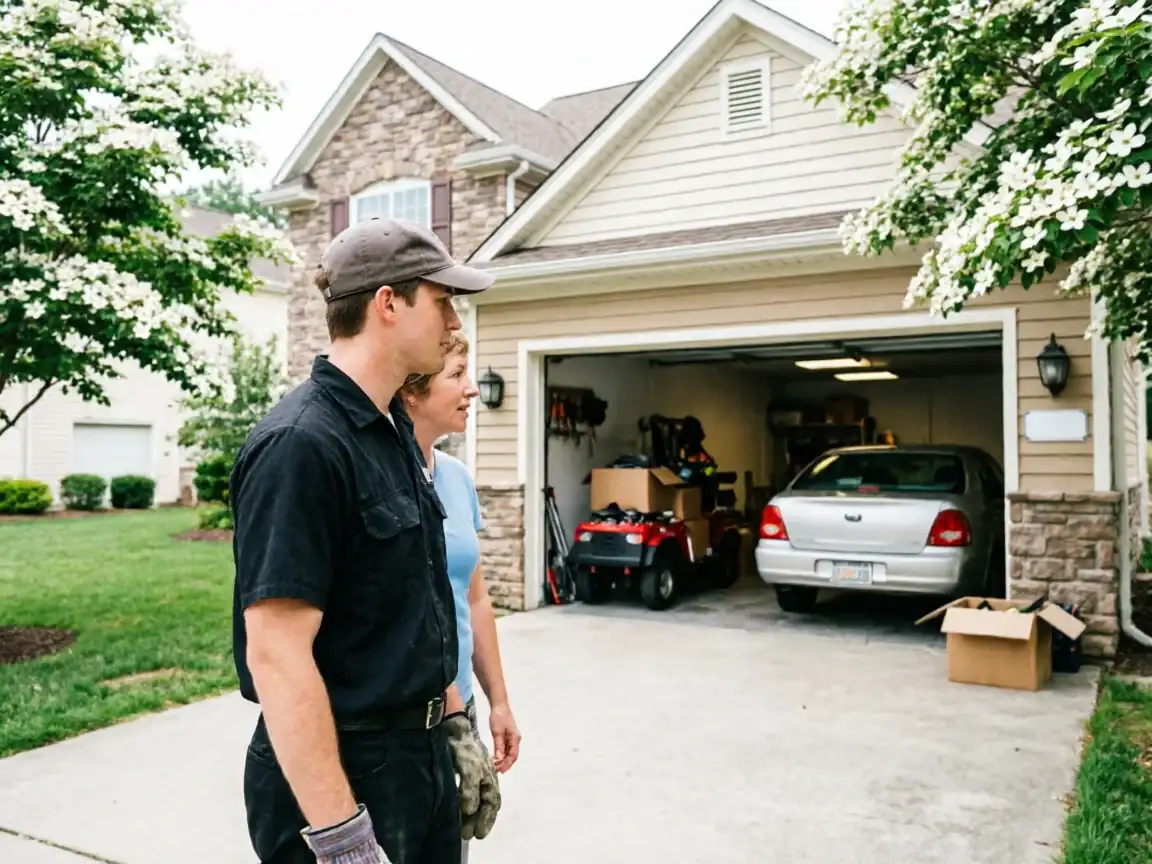
The drive out to Germantown runs eleven miles from our shop in Memphis, which changes how a panel job actually gets scheduled here compared to a call five minutes away. We don't carry a satellite stock of parts in Germantown, so getting the panel size, profile, and color right before we leave matters more on this run than on a short one - a mismatch means loading the truck twice.
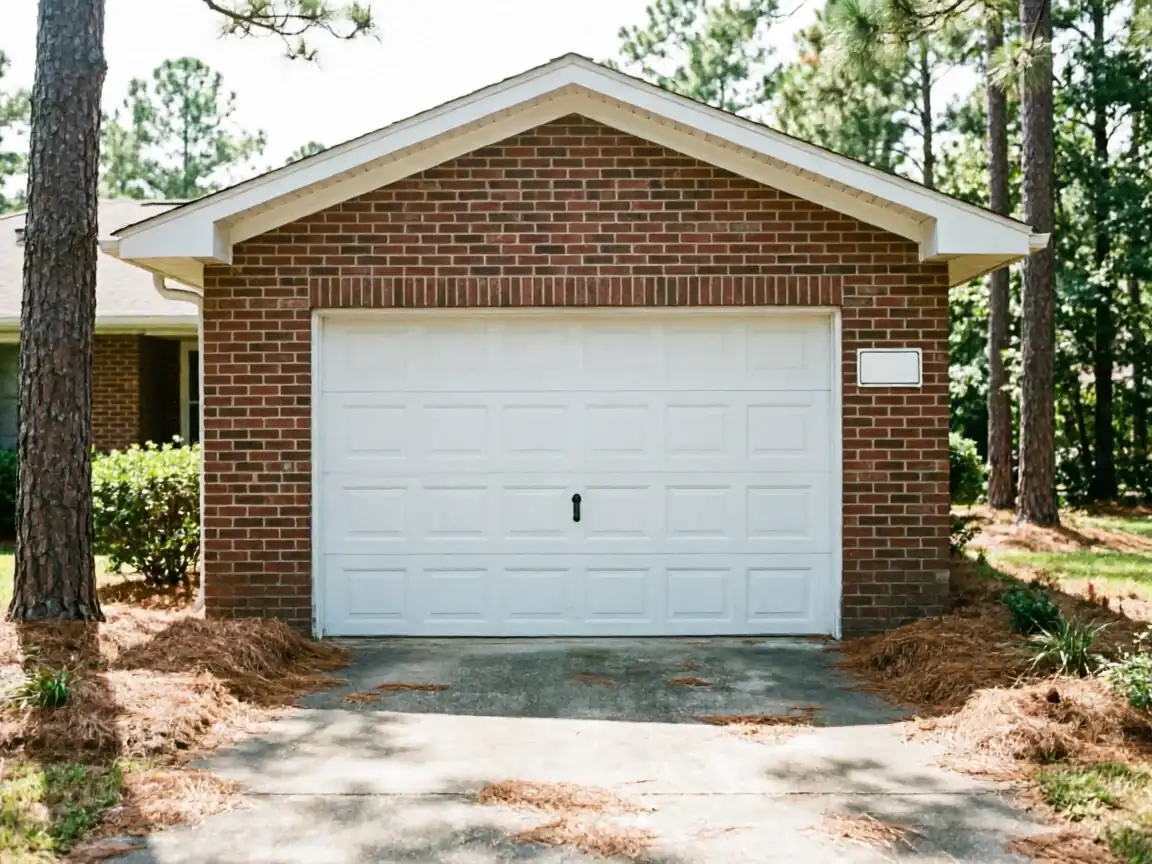
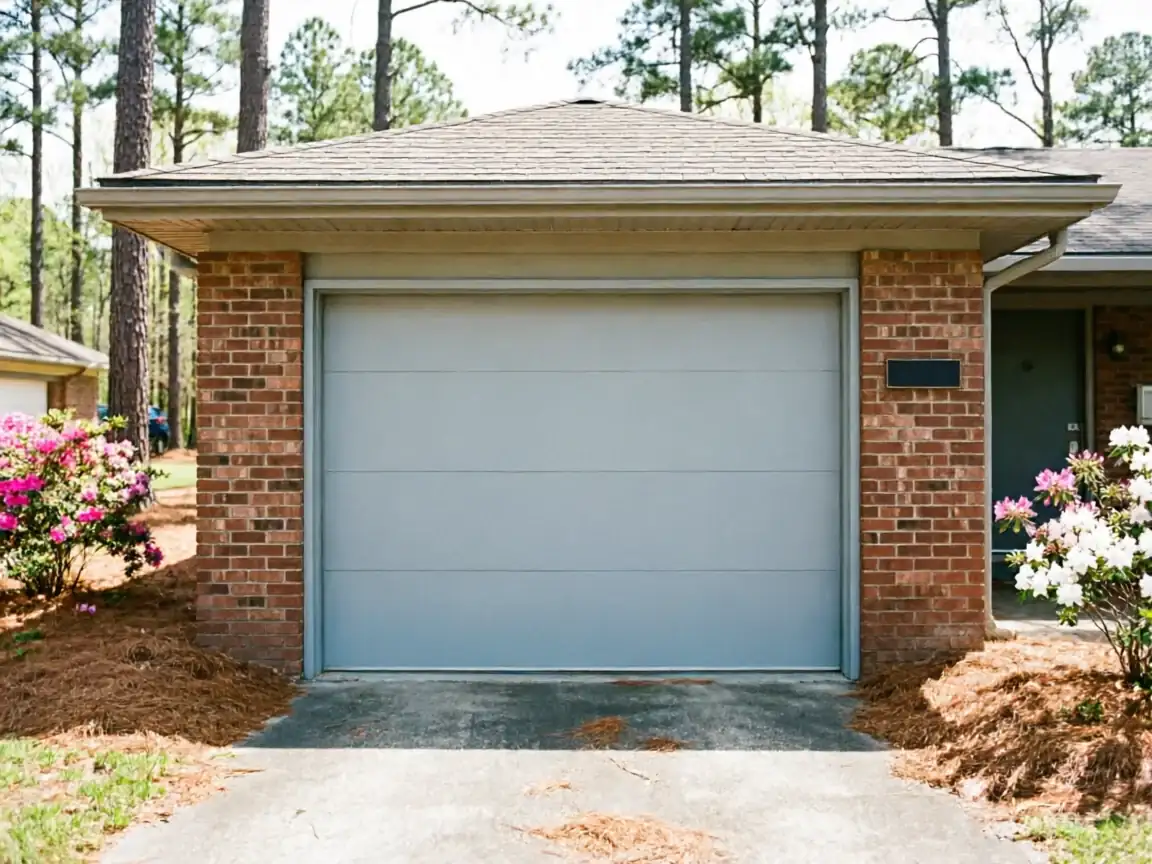
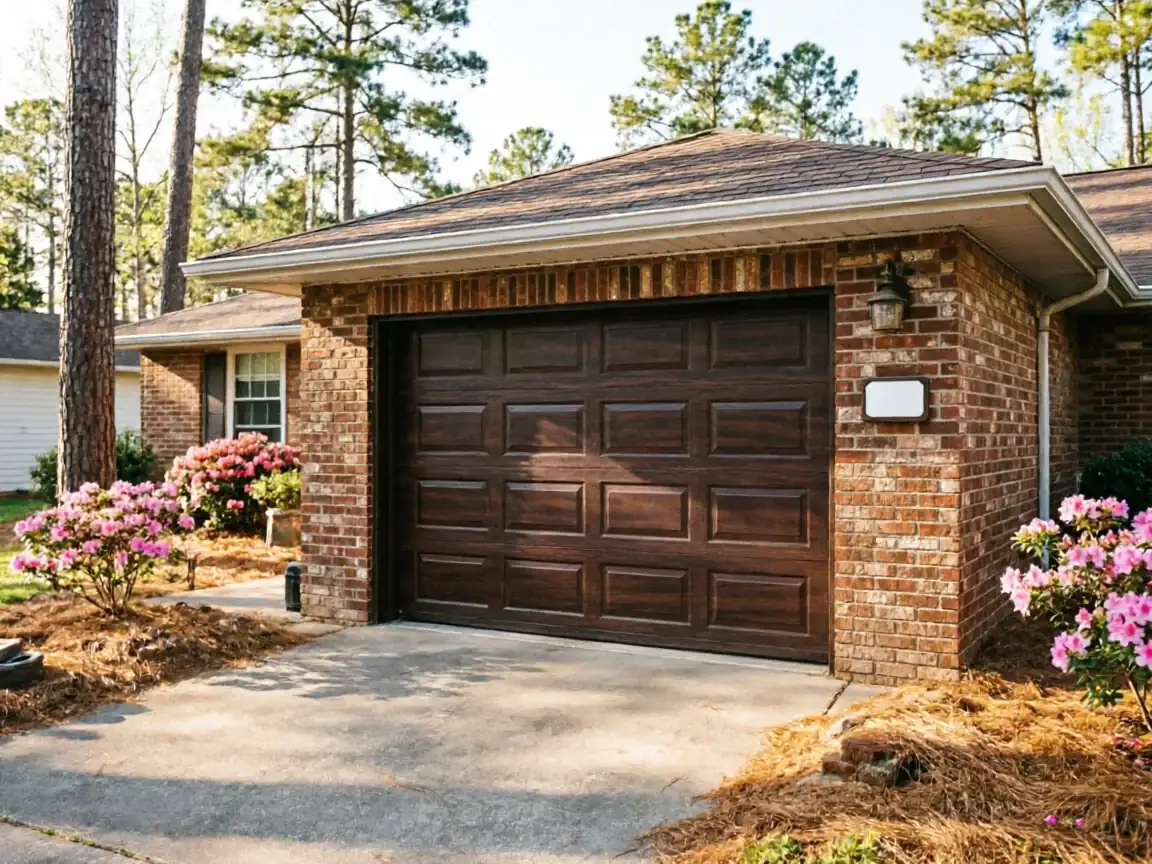
The houses in Germantown mostly went up around 1983, which puts the neighborhood right in the middle of the 1980s-90s construction wave that produced a lot of the double-layer steel sectional doors still hanging on these garages. That generation of door used builder-grade panel profiles that got discontinued or reworked more than once since, so an exact color and rib-pattern match on a 40-year-old door isn't always a one-call fix.
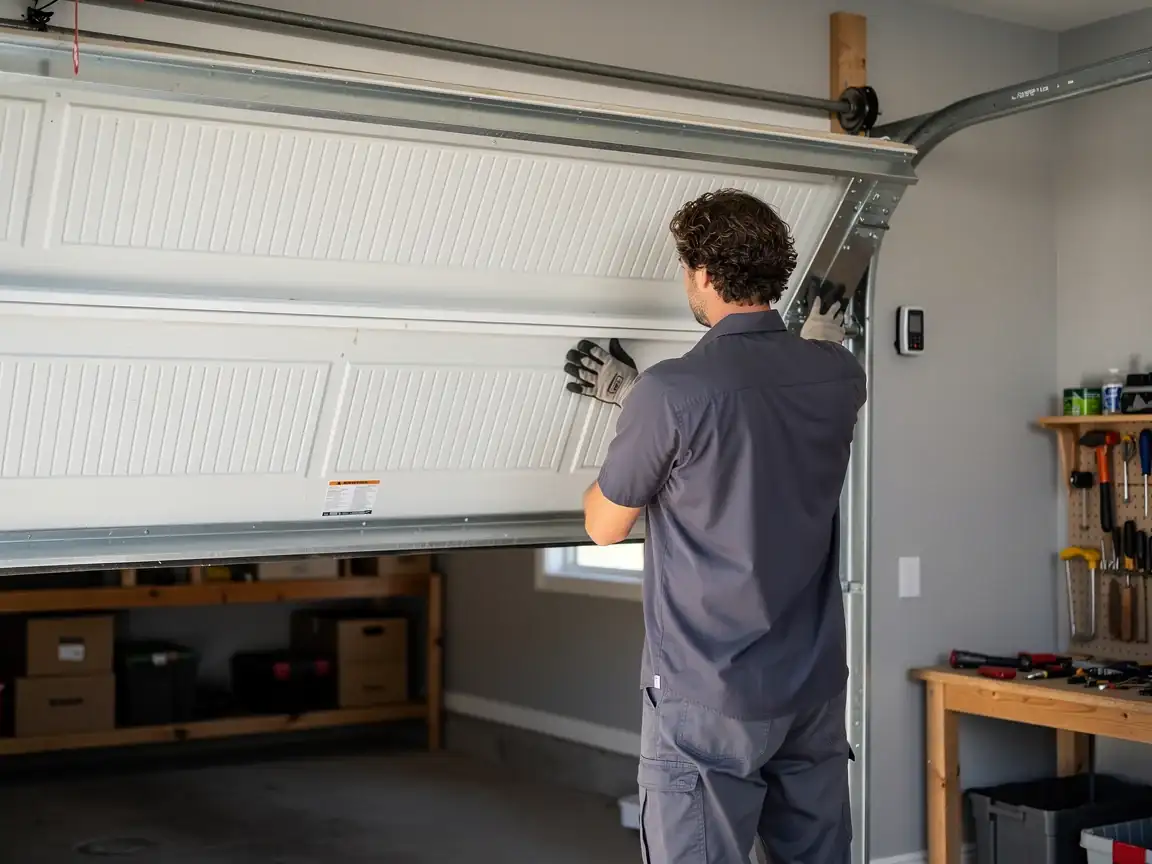
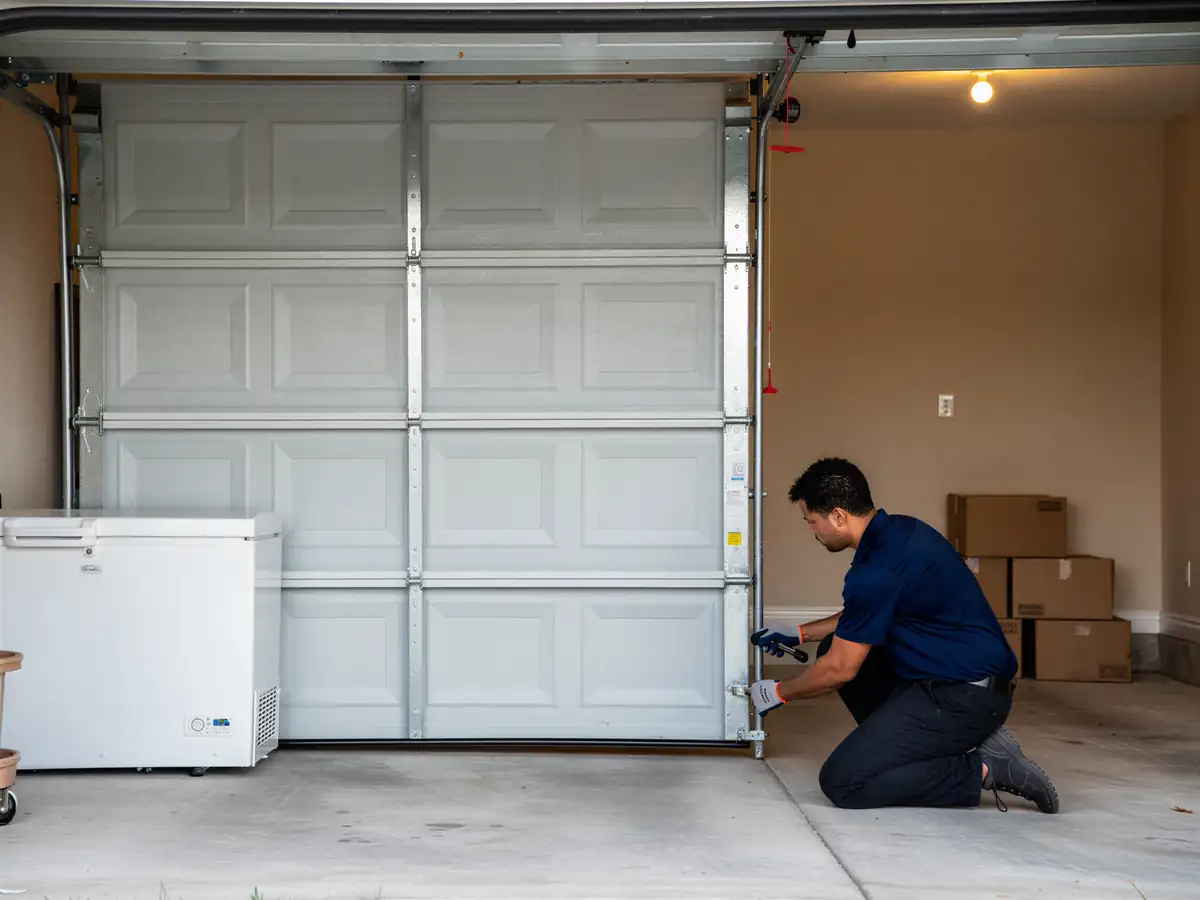
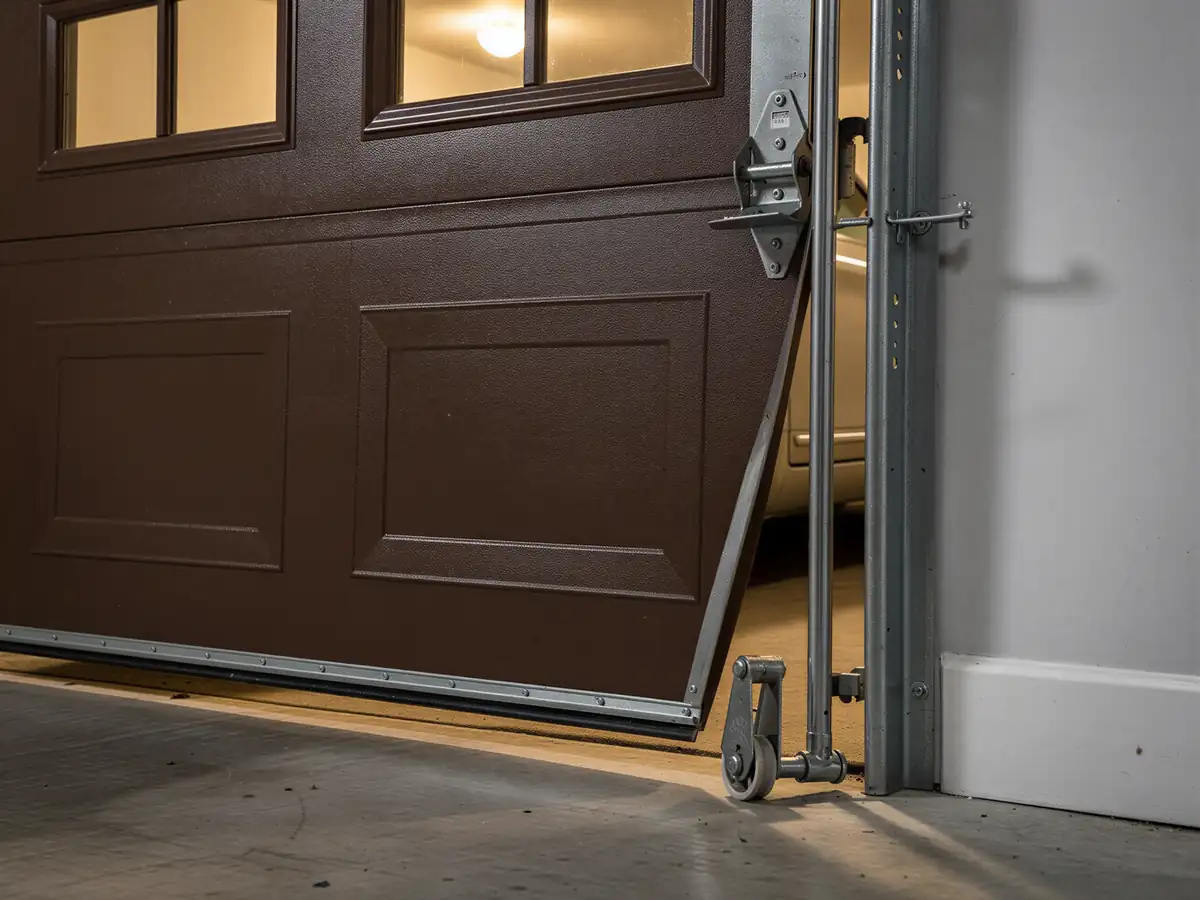
A bumped panel from a trailer hitch or a backed-into corner is common on doors this age because the steel gauge from that era dents rather than flexes. We see a lot of single-panel damage on the bottom section, where a car bumper or a dropped basketball does the damage, with the rest of the door still sound.
What Is on the Truck
For an eleven-mile run we load panel stock sized for the common widths in Germantown's 1980s housing - the door openings from that build era run narrower than what newer construction uses, so we carry sections cut to those dimensions rather than assume a standard modern width fits. We also bring touch-up paint and trim pieces because color-matching a panel on a door that's been fading in the sun since the Reagan administration almost never means pulling straight from a factory swatch.
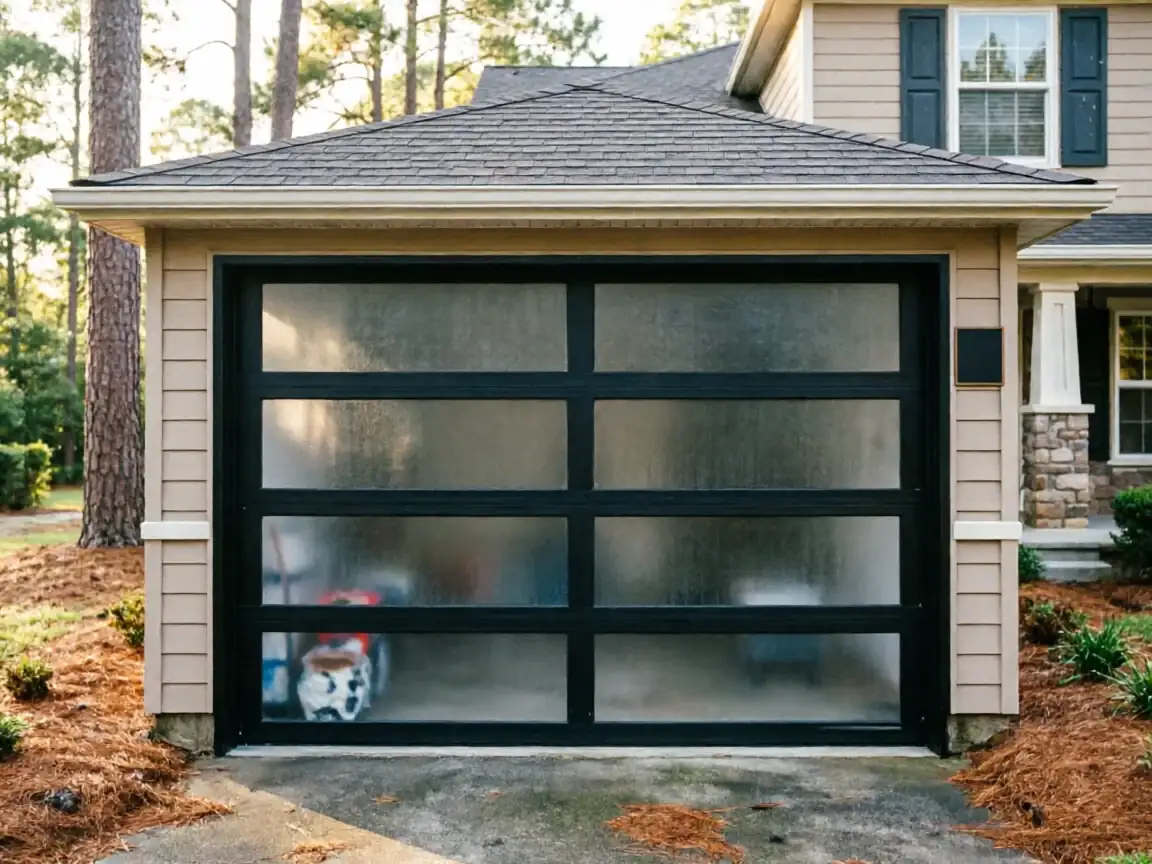
We carry both insulated and non-insulated sections, since Germantown sits in the same cold-moderate climate band as the rest of the service area and a lot of owners here are upgrading from the bare single-layer panels original to their doors. If a full match isn't possible same-visit, we'll bring what fits functionally and order the cosmetic match separately rather than hold the whole repair for a paint chip.
One honest limit: if the exact panel profile for an older Germantown door is out of production, we don't fake a match with a close-enough section. We'll tell you straight that a full-door replacement makes more sense than chasing a part nobody makes anymore.
What Can Go Wrong
On a door built around 1983, pulling one bad panel can expose hardware nobody stocks new anymore
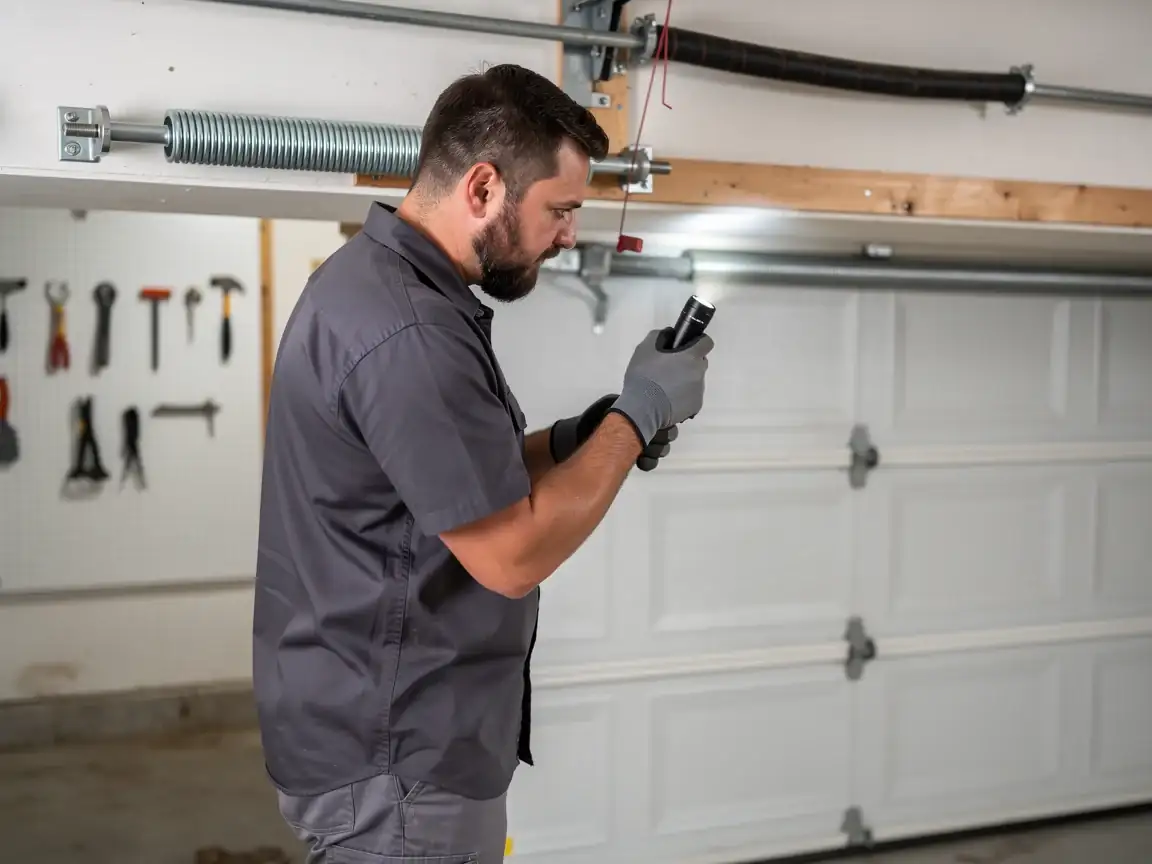
End hinges, stile brackets, or roller carriages sized to a track width that's since been standardized differently. Swapping just the panel without checking the attached hardware can leave the new section sitting slightly out of plane with the rest of the door, which shows up as a rub against the weatherstrip or a roller that binds a few weeks later.
Germantown's median household income runs well above the service area's overall median of $119,876
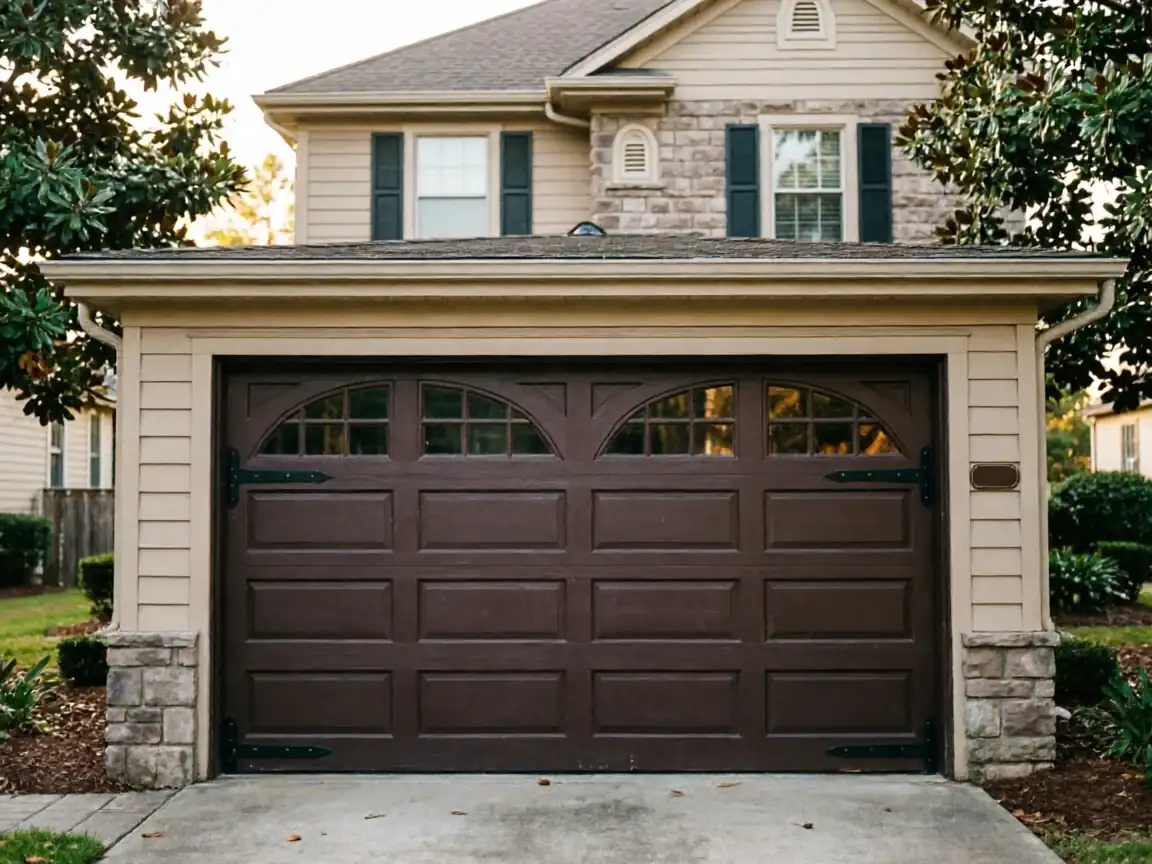
And it shows up in the job itself: more owners here ask for a full matched-panel set rather than a single patched section, because they want the door to look uniform rather than carry one visibly newer piece. That's a reasonable call on a door people plan to keep for years, but it does add to the job.
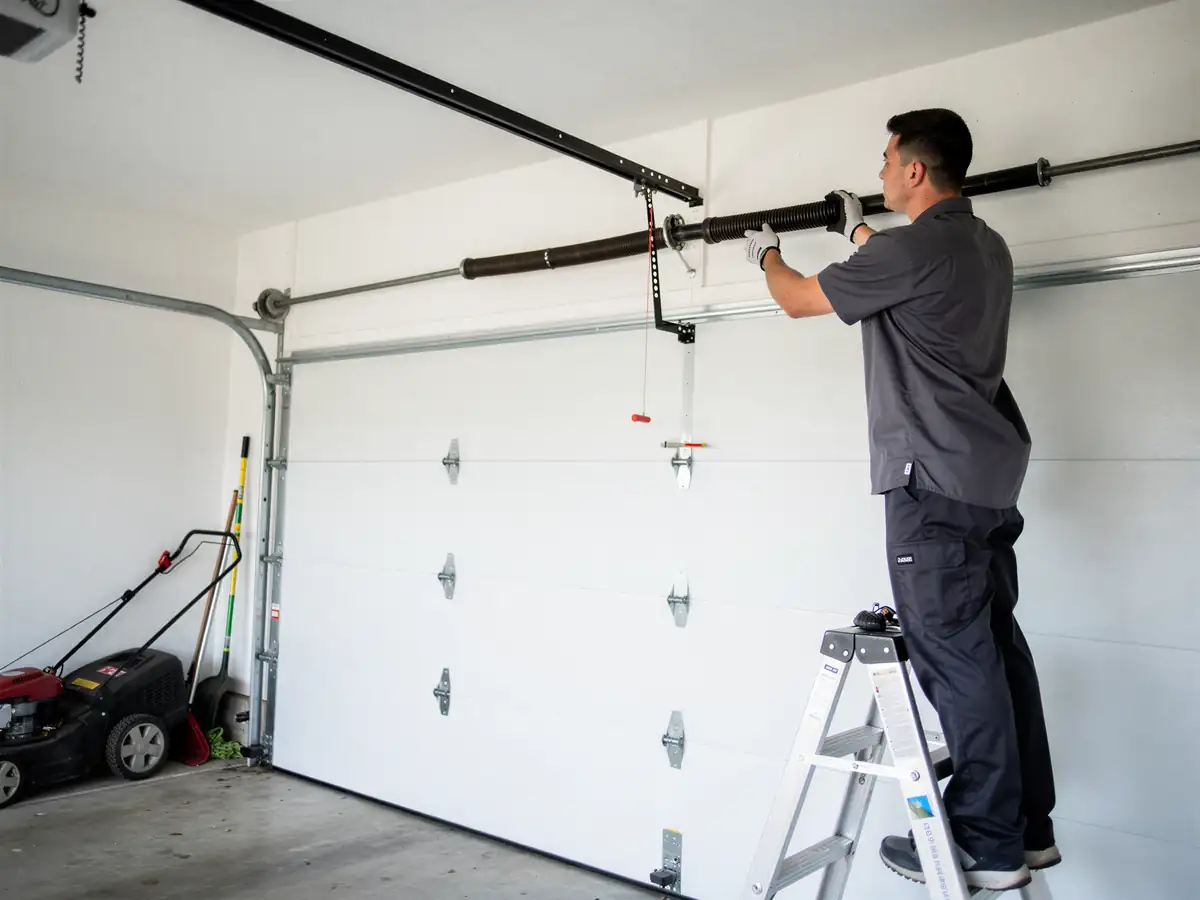
We also run into cable and spring tension that's drifted out of adjustment around the damaged panel
Especially if the door's been limping along bent for a while before the call comes in. That gets checked and reset as part of the job, not treated as a separate problem to come back for.
How Long It Takes
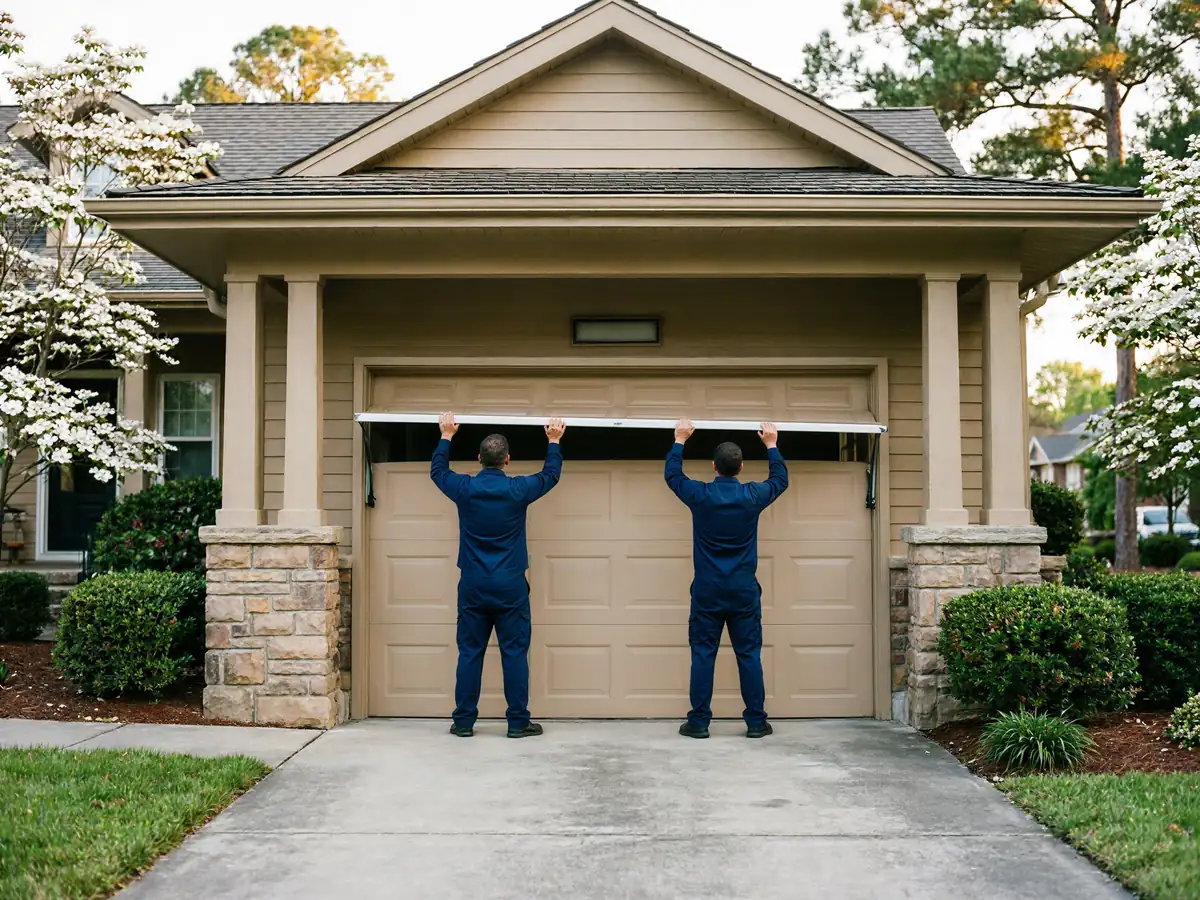
A straightforward single-panel swap, with the right section already on the truck, is usually a same-visit job once we're on site. Because the trip out is eleven miles rather than a few blocks, we build Germantown calls into a route rather than squeeze them in as a quick add-on, so confirming the panel details ahead of time keeps the visit itself short.
When the exact 1980s-era panel profile has to be special-ordered, the wait is on the part, not the install - once it's in, fitting it is still a same-visit job. We'd rather tell an owner up front that a color-matched trim piece needs a few days to arrive than show up and improvise a close-enough fix that looks off six months later.
Full-panel-set replacements, where every section on the door gets swapped for a uniform look, take longer on site simply because there's more hardware to check and realign across the whole door, not just one section.